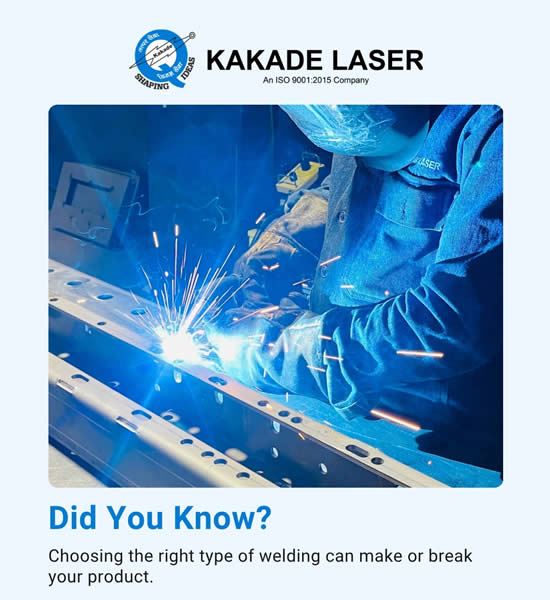
In modern manufacturing, the choice of welding process directly impacts product strength, dimensional accuracy, surface finish, and long-term reliability. For industries such as automotive, engineering, fabrication, and precision component manufacturing, selecting the right welding technology is a strategic decision — not just a production step.
At Kakade Laser, we work with multiple welding technologies to match the exact requirement of the component, material, and application.
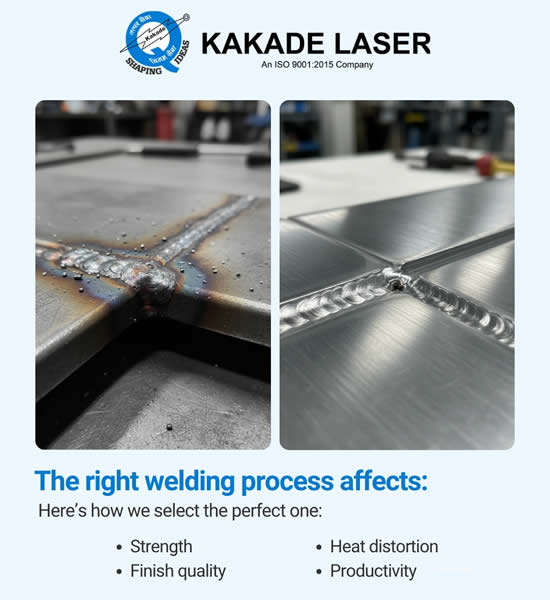
Different welding processes serve different engineering needs. Below is a practical comparison used in industrial manufacturing environments.
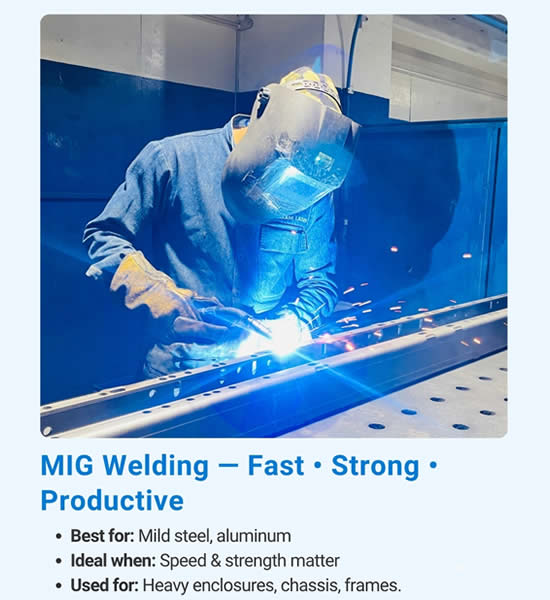
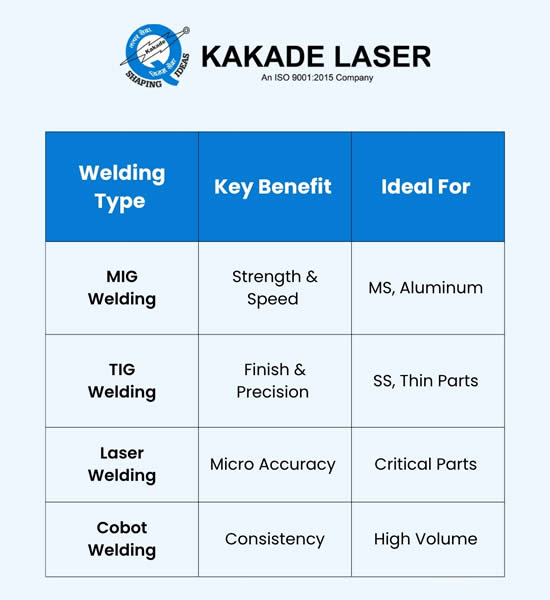
MIG welding is commonly used when speed, efficiency, and repeatability are critical.
Structural fabrication
Industrial assemblies
Medium to thick metal components
High production speed
Cost-effective for bulk manufacturing
Suitable for automation
In many fabrication projects, MIG welding supports consistent output at scale.
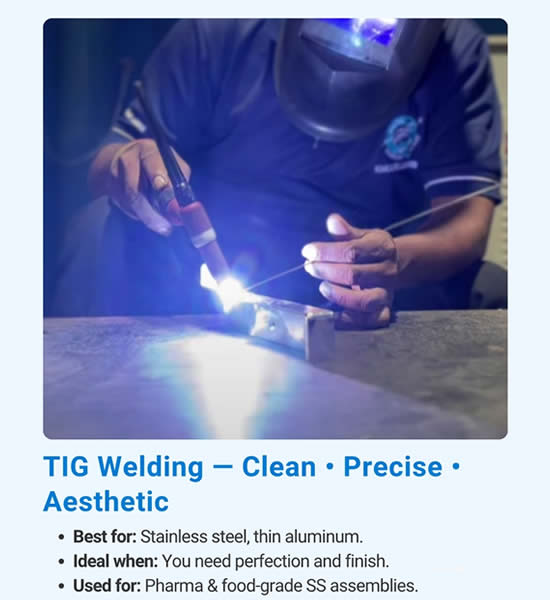
TIG welding is preferred when clean welds, accuracy, and control are essential.
Stainless steel components
Thin sheet metal parts
High-quality visible welds
Superior finish
Precise heat control
Strong and clean joints
This process is widely used in precision engineering and high-quality fabrication work.
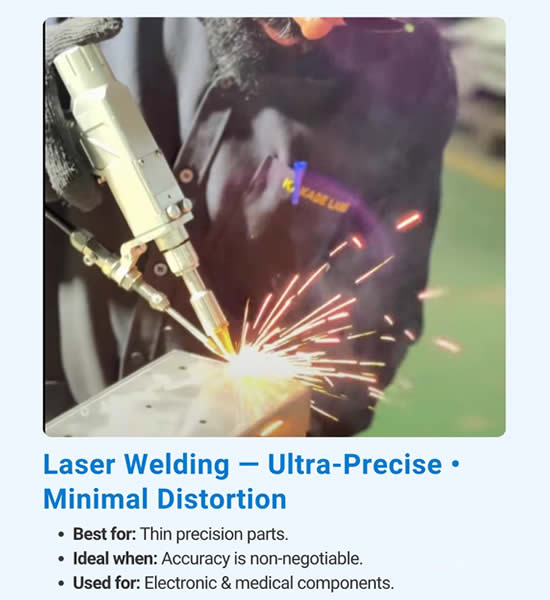
Laser welding is ideal for applications that demand tight tolerances and minimal distortion.
Micro components
Automotive precision parts
Engineering assemblies requiring accuracy
Extremely precise welding
Minimal heat-affected zone
Suitable for complex and delicate parts
Laser welding enables manufacturers to achieve micron-level precision in critical components.
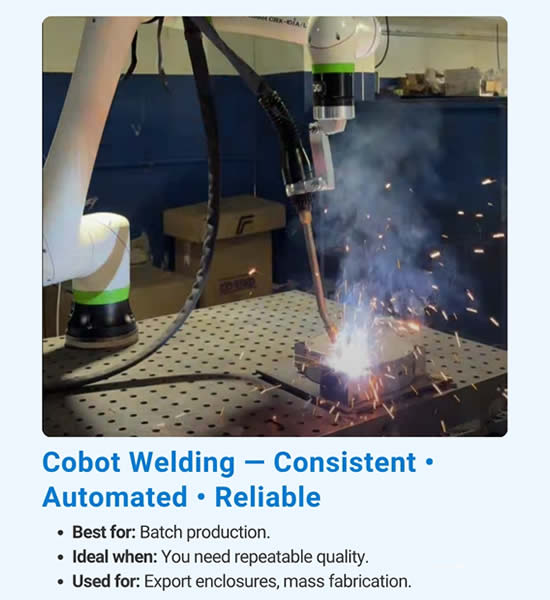
Cobot (collaborative robot) welding is designed for consistent, repeatable welding with automation support.
Repetitive production batches
Medium-volume manufacturing
Standardized weld joints
Improved consistency
Reduced manual variation
Increased productivity
Cobot welding plays an important role in modern smart manufacturing environments.
The right welding process depends on several technical factors
Material grade and thickness
Structural strength requirements
Surface finish expectations
Production volume
Tolerance and precision requirements
In many cases, combining multiple welding technologies ensures the best performance, efficiency, and durability of the final product.
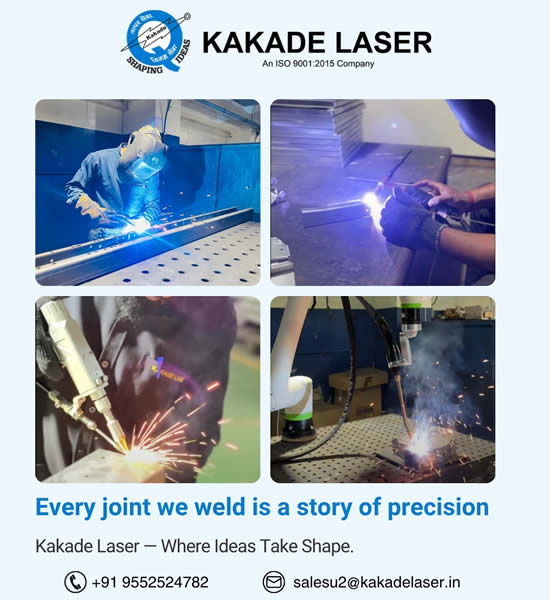
With expertise in precision manufacturing, laser technology, and engineered fabrication Kakade Laser supports industries with reliable and scalable welding solutions tailored to customer drawings and specifications.
Advanced Laser Welding
Precision Sheet Metal Fabrication
Custom Component Manufacturing